Two Halloween moments that changed in seconds
Halloween is supposed to be fun. Costumes, candy, kids running from house to house like they have somewhere VERY important to be. 🎃 Most of us have been around enough children on Halloween to know that “walking calmly and predictably” is probably not at the top of their priority list. They are thinking about the next house, the next piece of candy and whether their sibling somehow ended up with a better haul.
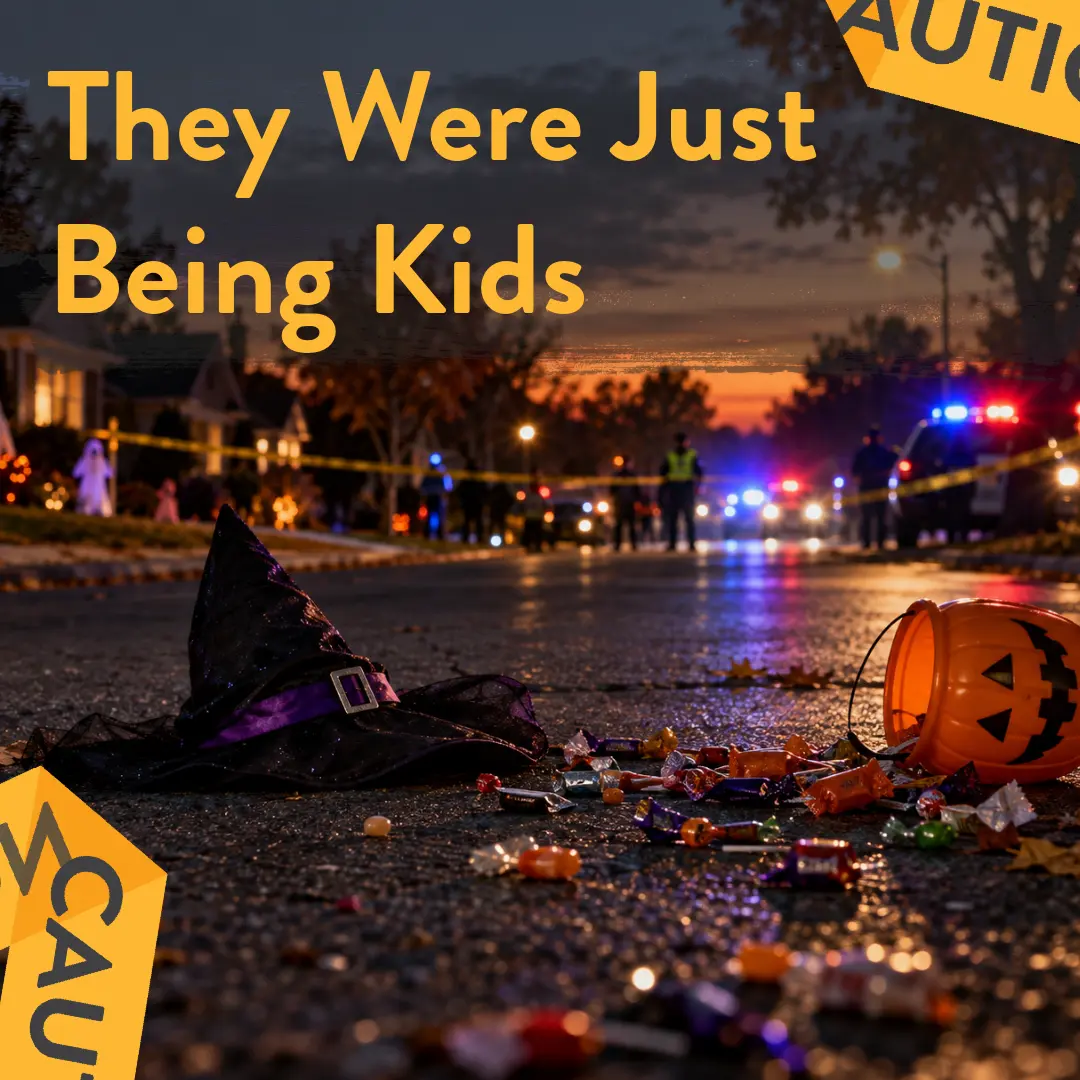
Last Halloween in Tracy, California, a boy and a girl were out trick-or-treating when they were struck by a vehicle. Police were called around 8:52 p.m., and both children were taken to the hospital with serious injuries. They were later reported to be in stable condition, but what should have been an ordinary Halloween night turned into something their families will probably never forget.
That story stayed with me because there was nothing unusual about what those kids were doing. They were just trick-or-treating. They were probably excited, distracted and moving a little faster than the adults around them would have preferred. In other words, they were just being kids.
And Halloween really is different on the road. A study that looked at 42 years of U.S. traffic data found that pedestrian fatality risk was 43% higher on Halloween evenings than on comparison nights. For children ages 4 to 8, the increase was even more striking, with pedestrian fatality risk about 10 times higher.
I’m not sharing that because I think anyone needs another lecture about slowing down, watching crosswalks or paying attention. You already know that. What I keep thinking about is how quickly something ordinary can change when there are little people around who are not thinking like adults.
Maybe that little dinosaur running toward the next house is your grandson. Maybe the princess standing between two parked cars is your niece. Maybe the kid who suddenly changes direction because he spotted a house with the “good candy” is your neighbor’s son, your daughter or somebody else’s whole world.
Sometimes awareness changes when the person in front of you stops being “a pedestrian” and starts looking like someone you love.
That same thought came back to me when I read another story from October 2025. In Lavon, Texas, 10-year-old Leah James and her 7-year-old brother Logan were playing on a trampoline while eating sour hard candy. Logan began choking, and within seconds, Leah realized something was wrong. She tried to help him, then used abdominal thrusts she had learned from her mom, and the candy came out.
Again, nothing about the beginning of that story sounds unusual. Two kids. A trampoline. Candy. Probably a lot of laughing and messing around right before everything changed.
What struck me most was not the candy itself. It was that Leah noticed her brother.
She saw the moment when play stopped being play. She recognized that something was wrong and stayed with him. That kind of awareness is what we talk about all the time in safety, but sometimes the words “situational awareness” make it sound much more complicated than it really is.
Sometimes it is simply paying attention to the person next to you.
That is why these two stories belong together for me. One happened on a street on Halloween night. One happened in a backyard with a piece of candy. Neither started as an emergency, and neither child woke up that day expecting anything bad to happen.
That is probably the part workers understand better than anyone.
You do the same job hundreds of times. You drive the same roads. You use the same tools. You work next to the same people. Most days go exactly the way you expect them to, and that familiarity is part of what makes you good at what you do.
But every once in a while, something changes.
A person steps somewhere you did not expect. Someone gets quiet when they should not be quiet. Something looks different, sounds different or just feels a little off. Those moments do not always come with a warning sign telling you to pay attention.
And on Halloween, some of those people are really little.
They may be your grandchild, your niece, your nephew, your son, your daughter or somebody else’s kid who is too busy thinking about candy to understand what you can see from the driver’s seat. They are trusting the adults around them without even realizing they are doing it.
That is why this matters to me.
Not because I want you to memorize another Halloween safety checklist. You already know the rules.
I just want you to see the little person behind them.
Because when safety moves from the head to the heart, awareness feels different. You are not watching for “pedestrians.” You are watching for somebody’s baby, somebody’s grandkid, somebody’s whole heart running across the street in a Halloween costume. 💛
And sometimes that is all it takes to make us look one more time.
If you’re looking for a way to make safety feel more personal for your team, I’d be happy to talk with you about what that could look like. No pressure, no big sales pitch…just a conversation about your people, your culture, and what might actually resonate. 💛